Good Things Happen. Love is Real. We Will Be Ok.

Good Things Happen.

Love is Real.

We Will Be Ok.

These three statements make up a mantra, which encapsulates my relationship with my wife. We come back to this mantra during challenging times in our relationship and individually. It’s become a tether which brings us back to earth, back to each other if one finds themselves drifting in the world of preoccupation or anxiety.

What is your mantra? What is a word or phrase that grounds you in daily life? When I think of a mantra, I liken it to the first stage of prayer, which is vocal. We repeat over and over, a word or phrase sacred to us, which draws our attention away from surrounding buzz and fixes it towards the moment.

It’s hard to believe that 2020 is almost over. I’m sure for a lot of us the last phrase of the mantra, “We will be ok,” is something that hits home. It’s a consolation that we do not have full control of how things turn out in life. Rather, all we are left with is the choice to believe that something good can happen, that God brought us to this moment for a reason.

As we approach the Fourth Sunday of Advent, that mantra for Christians is “Emmanuel,” the light which comes to overcome the shadows in our world. We call out to Jesus in prayer, especially during times of hardship. Today, in a time of pandemic, we all experience a multitude of hardships. Furthermore, it seems these hardships continue to pile up.

Yet, in the midst of this, we are called to cry out “Abba, Father!” Mantras, said in repetition, become a form of prayer in of themselves. As mentioned, mantras are tethers that keep us grounded. The words or phrases that comprise the mantra articulate values and meaning that are essential for us.

I invite you to think about your mantra. Write it down. Keep it somewhere close so that you can return to it. Commit it to memory. Finally, own it!

What is “Essential?”

Image by Ben Rosett on Unsplash

“Essential” is a word that I have mixed feelings about. Certainly some things are more important than others, but that is based on a set of values or criteria. When it comes to the pandemic, essential workers are people like grocers and health care workers, which is understandable. When it comes to a thought, it’s a little trickier. I remember back in grad school my professor gave students the exercise of summarizing an entire thought, the thesis, down to a single sentence As one ponders on how to trim the fat of off a thought, they are left asking, “What is essential?”

I found myself asking that same question again and again during this pandemic, my wedding in less than a month – four weeks to be exact. Originally, my fiancee and I had all these wonderful plans and a vision of how things were going to be. Since the pandemic began earlier this year, those plans and vision changed dramatically: a guest list of 130 people to immediate family, a shortened reception, and flying in a priest to preside because our current one is on medical leave.

These are just some of the changes, but when you frame the situation from the question “What is essential,” then it would be the sacrament of marriage, family, and safety. I was curious to look up the definition of essential and a common definition was something extremely important. In the case of a wedding (a Roman Catholic one at that), the only thing really essential is the sacrament. Sure there is preparation that takes place before hand, but one’s family does not necessarily have to be there. Safety is important too, but that is to be presumed.

Four weeks out from the wedding, with new details and challenges emerging from the pandemic, I find myself asking the question, “What is essential?” It’s a fundamental question that is a human question. Our desires ultimately lead us to happiness and fulfillment. We will never get to that point if we do not have a singular focus to work towards. Asking such a human question can help one to find some consolation because it’s an opportunity to learn to let go of situations that aren’t fully in your control.

If you ever find yourself in a situation where many details surrounding decision makes choosing difficult, ask yourself, “What is essential?”

Feeling the Grain

I’ll never forget that saying, “No pain, no gain.” As I hear someone saying that, I immediately think of Arnold Schwarzenneger yelling at someone lifting weights at Gold’s Gym. There’s no progress without feeling the pains of the process, moments of failure and doubt, but in the end, triumph and success.

The cedar boxes were a longtime coming, after three trial boxes. I had done some form of woodworking prior, making a mantle clock. This was a project with my fiancee’s dad, a small project indeed, but one that required different sets of skills. Making window boxes was my first attempt to do woodworking on my own. There was so much excitement at the beginning, but as I struggled to get the right cut or wood flush with each other, I began to doubt my ability to finish this project.

One of the things I’m learning about woodworking is that learning to build a box is an essential building block. If one masters the steps in building a box, one can essentially build anything out of wood. I found a plan to build window flower boxes from Pinterest, which required cedar wood, for its exceptional resistance to outside weather. Before stumbling upon those plans, I tried pressure treated wood, which also holds up outdoors, but is a much heavier wood to use.

Running my hands on the cedar was like feeling the softness of pond stone or the skin of a baby. It was remarkable to experience the lightness and softness of the cedar wood, contrary to what I anticipated given the hardiness of the cedar. When I began making cuts and screwing pieces together, keeping the wood from splitting was a labor of love. This gave me a deeper understanding of the importance of delicate hands, patience and prudence.

When it comes to building things, there is a temptation to want to hurry to put everything together and say that you’ve built something. Looking at the final product again, one notices the flaws that could have been prevented if the time was taken to follow the necessary steps to ensure a good build. Come think of it, this mindset really caters to the instant gratification culture that we find ourselves in. We want results and we will find the means to get them quickly.

American journalist, Hunter J. Thompson, once said, “Anything worth doing, is worth doing right.” These words ring true not only for woodworking, but for learning something that one is passionate about. They say that it takes over 10,000 hours to master something. While that is something to shoot for, I’d say anything worthwhile is worth doing over the course of a lifetime.

Feeling the grain is about getting your hands immersed in the moment, to feel the softness and fragility of experience and allowing your hands to shape those memories into milestones. One thing that I’ve learned in finishing these boxes is that there is a right way to doing things, a way that involves trial and error, dedication to the process and an openness to learning, which will result in something beautiful in the end.

Growing Together

It’s hard to believe that I’m going to be married in less than four months. As exciting as it’s been preparing for marriage during this time of engagement, there have been moments of stress that have crept along the way.

What people don’t talk enough about when getting engaged is that this is a time of trial and discernment. Don’t me wrong, being engaged is wonderful. Yet, there is a whole learning curve that come with being engaged. This is a time in a couple’s relationship where all real topics of life are brought on the table: children, finances, routines, living arrangements, etc. Couples may have talked about these things in some form or fashion. When they get engaged, these talks have to be more substantial.

My fiancee and I also bought a house a couple months ago and we’ve had the joy of settling in before the shutdown order came into effect due the pandemic. We’re following the traditional custom of my fiancee moving in after we get married, so I’m keeping the house occupied for the time being. I have to admit, it’s been really nice transitioning into what it would look like to live together. There’s so much excitement for what is to come when she finally moves in.

Growing together means loving each other at the best and worst of moments. The convenience of dating is whenever the worst moments come, say moments of argument, both individuals can go home without the burden of confronting of each other. Unless both people are living together, two people in a relationship have their own space to process their emotions: to cry, to yell, and to be quiet.

I was talking to my fiancee a couple days ago and she shared something with me that I found myself reflecting on. She told me that whenever we find ourselves angry at each other or arguing that it’s better to hate what that person is doing, rather than hating the person directly. Hating what the person does, not the person, helps to differentiate the problem. “He makes me angry,” versus, “What he does makes me angry.”

Learning to differentiate between the two has been an honest game changer for me. What my fiancee and I do that bothers us should never take away the love that we have for each other. We’ve known each other for about two years before getting engaged, so we’ve had some time to plant some roots in our relationship. We know each other enough that when one of us does something out of character, we have a better understanding why they did it.

For me, I am a perfectionist when it comes to doing things. Whenever, I encounter failure, I let that moment ruin my day. I clam up, isolating myself and not talking to anyone. My fiancee has begun to pick up on that since we bought the house and she’s been able to visit regularly. Like a gardener, we know the roots we’ve planted in each other’s lives and the weeds of arguments that creep are only superficial. Growing together means tending to the roots daily, nourishing them by being patient with the other.

Table Time is a Sacred Time

restaurant-691397_1920

Two weeks ago, my fiancée and I were invited to have dinner with some friends from our young adult community. It was our second time going over at their place, the last we visited being Friendsgiving. This time, it was interesting to see their place without thirty or so young adults filling every conceivable space of the house. These friends are one of the few who actually have a house since most of our friends in the community have apartments.

It was a great time to catch up with them, especially since they are from the Midwest and went to a large university, part of a network called the “Big Ten” schools. One of the things that I missed about the Midwest is the hospitality and the laidback personality when it came to life. Certainly, that is easier to understand when one is away from the city life or business that is part of the ethos here on the East coast. Being at the dinner table with friends is one my favorite past time, an intimate experience in which people are gathering to share and recollect memories while basking in the delicious food that’s been prepared.

This takes me back to a book that I’ve read and loaned out to some friends, “The Grace of Enough” by Haley Stewart. Stewart is a Catholic mother, writer, blogger, and podcaster who writes on various elements of Catholic living, from the vantage point of being a mother. The book centers around reclaiming a more simplistic life and giving priority to things that are most important such as family time, fostering values, building a beautiful home, etc. In one of the chapters, Haley writes,

“Somewhere along the way we lost the sense that sharing food around the table is a simple but crucial part of human experience. In fact, as sensory beings, we are wired to care about food and connect with people through that shared experience of eating together. This communal aspect of eating is why food allergies can feel isolating. It’s why holiday cooking is so emotive and the scents and the flavors of a thanksgiving meal can draw us back to important memories,” (pg. 74-75).

All the moments that encompass meal at table is the real why table time is a sacred time. The occassion is not fixated on the food, rather the people who are part of the meal. It’s about the hands that have prepared the meal, those partaking in the feast and most especially those who go without. Meals are sacred in that everyone is invited to the table. In Scripture, the beautiful image of a feast or a wedding banquet suggests the grandeur of such gatherings.

The next time that you are with others, put down the phone stop worry about your future obligations and learn to be present with those around you. Memories of being at table are some of the treasures of human life, treasures that we pass on to future generations.


Sacred Spaces

IMG_3388

“There’s no place like home!” I loved hearing that quote growing up and it certainly held true for my own home. Whether it coming from home school or work, the minute I walked through the door, dropped my things on the floor and plopped my self on the living room couch, I knew that moment marked the start of the weekend or end of the day. As someone who appreciates alone time, having a space all to your own is something special.

A sacred space is a space dedicated to prayer. Recall in the gospels when Jesus cleaned the temple filled with people buying and selling items. This is one of the few occasions we see Jesus angered. He exclaims that the temple, His father’s house, is a house of prayer. Hold onto that expression for a moment, his father’s house is a house of prayer. How does that translate for you in your home? Is your home a house prayer? Is your home conducive to silence and spiritual reading?

In the book, Theology of Home, the authors provide a strong theological and scriptural basis for the home. For instance, they draw inspiration from the writings of St. Teresa of Avila, the Interior Castle, noting that the inside of a home is reflective of one’s soul. I remember hearing a homily from a priest a couple years ago, around Advent, saying that the home is like an inside a home. The priest began had people wonder how they would prepare their home if they knew that Jesus was coming.

If you knew Jesus was coming into your home, how would you prepare for his coming? Preparing one’s home for guests, is easily understood around the holidays such as Christmas and Easter, yet how is the home prepared on a normal day. More important, is the house spic and span if he were to show up unannounced?  Sacred spaces are important because the spaces are used for a deeper purpose.

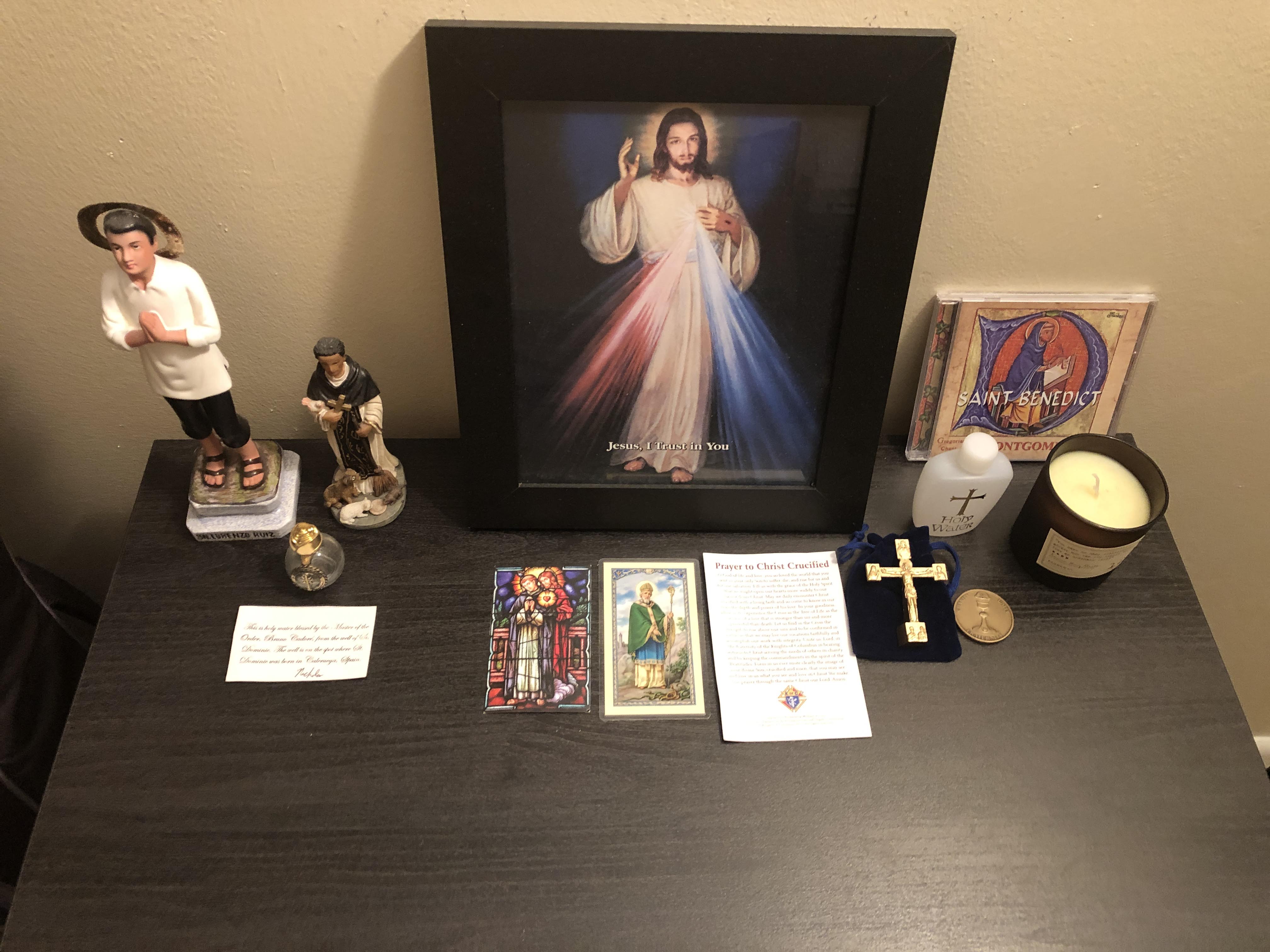
The picture above is an example of my own sacred space.  I have mementos from when I was in formation as a Dominican friar and items I received along the way from friends. I have to admit that I am not the most consistent person when it comes prayer, but the sacred space is unique in that it has permanence. What I mean by permanence is that the sacred space will still remain even if one does not follow through in their routine or commitment to pray, reflect or engage in some form of spiritual exercise.

Environments have influence on one’s own habits and the use of sacred spaces can help one to orient themselves back to a routine prayer life if they begin to falter. When one comes home, they see the sacred space there. The space is a beacon, a reminder of what needs to be central in their life, a relationship with Jesus Christ. Sacred spaces are not to haunt or send one into a guilt trip. Rather, it helps orient one to go beyond the mundane and to seek out the transcendental.

Show Me Don’t Tell Me

DSC_0526

Look at that color! I love the vibrancy in this photo, one that I took with my new digital camera early this year. A quote that I came across and is resurfacing again is from an acclaimed author Anton Chekhov, “Don’t tell me the moon is shining; show me the glint of light on broken glass. For those in the writing profession, this is a staple phrase that underscores the importance of showing and not telling the scene.

Since fifth grade, I’ve always had a knack for writing. I remember sitting down in the kitchen writing away for an essay contest at my elementary school through the D.A.R.E. program. For those who can remember the acronym, it was drug abuse resistance education. I can’t remember what the prompt was, something about the importance of going through the program. All I can recall was writing away on the kitchen table. The words came and the rhythm of writing was very comfortable. I honestly did not make much of what I wrote, simply putting thought to paper. After submitting and waiting sometime, I won the essay contest!

I’m currently engaged to someone who has a background in fiction writing, specializing in short stories. It’s been a joy getting to know their own writing interests through reading different books together. Until now, I’m starting to recover my own inner writer, trying to cultivate a habit of reading and writing regularly. My involvement in my job and interest in social justice and missionary work really sparked me interest in harnessing my ability to tell stories.

How about I narrate the picture above? Look how the bright streaks caress the soft, silky red petals of the flower, which stands lone on the frontlines. The red to yellow spectrum reigns on the outside with the red works its way inward to the core with the pungent yellow. The petals outward with excitement, rounded out by the softest ends, feeling like bristles of a nylon brush when hands run up against it.  Ok, ok, this is my attempt, but overall a great exercise. Maybe I’ll make a habit of doing that everyday in order to develop a type of muscle memory.

Telling stories is especially important in my line of work with pastoral ministry and nonprofit work. In ministry, I need to communicate the story of Jesus Christ, the story of the Church, the story of the saints and so much more. In nonprofit work, I need to articulate the story of the individuals or communities who are impacted by the work of an organization. Essential to communicating a story is putting a face to a name. When communicating with stakeholders, they want to know the impact of their donations. The question needs to be able to answer is how is their money being used.

Showing, not telling is important to keep in mind when telling a story, especially someone’s story. Having had the opportunity to travel and work abroad for a brief time a few years ago, telling someone’s story is a privilege. Organizations such as Catholic Relief Services who do great work throughout the world create opportunities for individuals involved in their U.S. based programs to travel with some staff to countries where the organization is present. Those delegates, as we might call we them, are given the privilege of meeting individuals on the ground who are being empowered to make change in the local community.

These individuals do not have the luxury of traveling beyond their community to engage with others to support their work. Here comes organizations such as Catholic Relief Services who come in and engage in a form of accompaniment, learning from locals and the way of life, then creating opportunities for these individuals to better their situation. Delegates to different countries do a brief stint their, usually no more than two weeks, then travel back to tell the stories of their own experience, but more so the livelihood of other people. Again, they are putting a face to a name. When it comes to showing, not telling, I think that is what’s most important when communicating a story and engaging in writing.

Tears of Solidarity

IMG_2526

Quite an interesting title huh? Above is photo of some School Sisters of Notre Dame, the religious congregation I work for. Yesterday, I decided to attend a funeral for one of the sisters that passes away, one whom was recently moved to another healthcare facility in New York. Funerals are never an occasion to be happy. Sure there is a time to reflect on the life of the one who passed, but that does not discount the need to mourn for their passing I am thankful for my Catholic faith, which gives meaning to such human experiences, that death is not the final answer and the life life thereafter.

Being in attendance was a great way for me to show support for the sisters. Since starting my job (hard to believe that I am coming up on three months), I’ve been trying to find ways to learn their way life and be a part of it. Show up to this funeral seemed like a good opportunity to show support and that I really care about the sisters. There was some disconnect at the funeral, having not known Sister Mary Elizabeth who passed. As the Mass was starting, I was watching the sisters slowly finding their spots in the pews. I myself noticed the sizable gap in where they sat, those spaced that must have been filled by their sisters in the past who are now deceased. Some sat quietly while others took out a tissue to wipe the tears from their eyes.

When I was in formation as Dominican brother, I wrote a blog post about human experience and tears. I recalled a moment when Pope Francis visited the Philippines in 2014 and held a mass for a record-breaking attendance of more than six million Filipino, devout as they there, standing in the rain. A little girl walked up to Pope Francis at some point asking him why bad things (i.e. death) happen to good people. Pope Francis was struck by the question and admitted that he could not find the words to answer the little girl. Even in his homily, one that he prepared, Pope Francis found himself deviating from the script and instead speaking from his heart. He said that one cannot find the words in the such occasion of death and despair, leaving one to respond only through tears.

Though I could not respond similarly during the funeral, I’m glad that I took it upon myself to be there with the sisters in the midst of their tears. Tears speak volumes, what words can’t express. Pope Francis at the Mass said that we shed tears as a child that cries out to their parents. Mary, the mother of Jesus, shed tears quietly as she endured the the Passion of Jesus. In that uncomfortable space where our innate humanness is raw and our desire to want to “fix” the situation becomes hard to ignore, we are left to just be present to the other. These moments have taught me that there is sacredness is being present. That is precisely what we experience when we are before the Blessed Sacrament during adoration.

These vulnerable moments of human experience teaches us that there is a grace in being present with those who shed tears. We stand in solidarity with them because we bear a physical presence, being Jesus’ hands and feet to them, to show them that the tears they shed are for naught. The emotions felt in the chapel that day were strong and powerful, a testament to the life that Sister Mary Elizabeth led and left for the world in her passing. I may not have had the chance to get to know her, but being in the presence of those who were with her, her heart lived in and among those sisters, family and friends. Being present has power and grace, which Mary displayed at every moment of Jesus’ passion. Lord teach me to be present to others as Mary has, as these sisters have.

The Higher We Go

PierGiorgioFrassati-Alpiniste

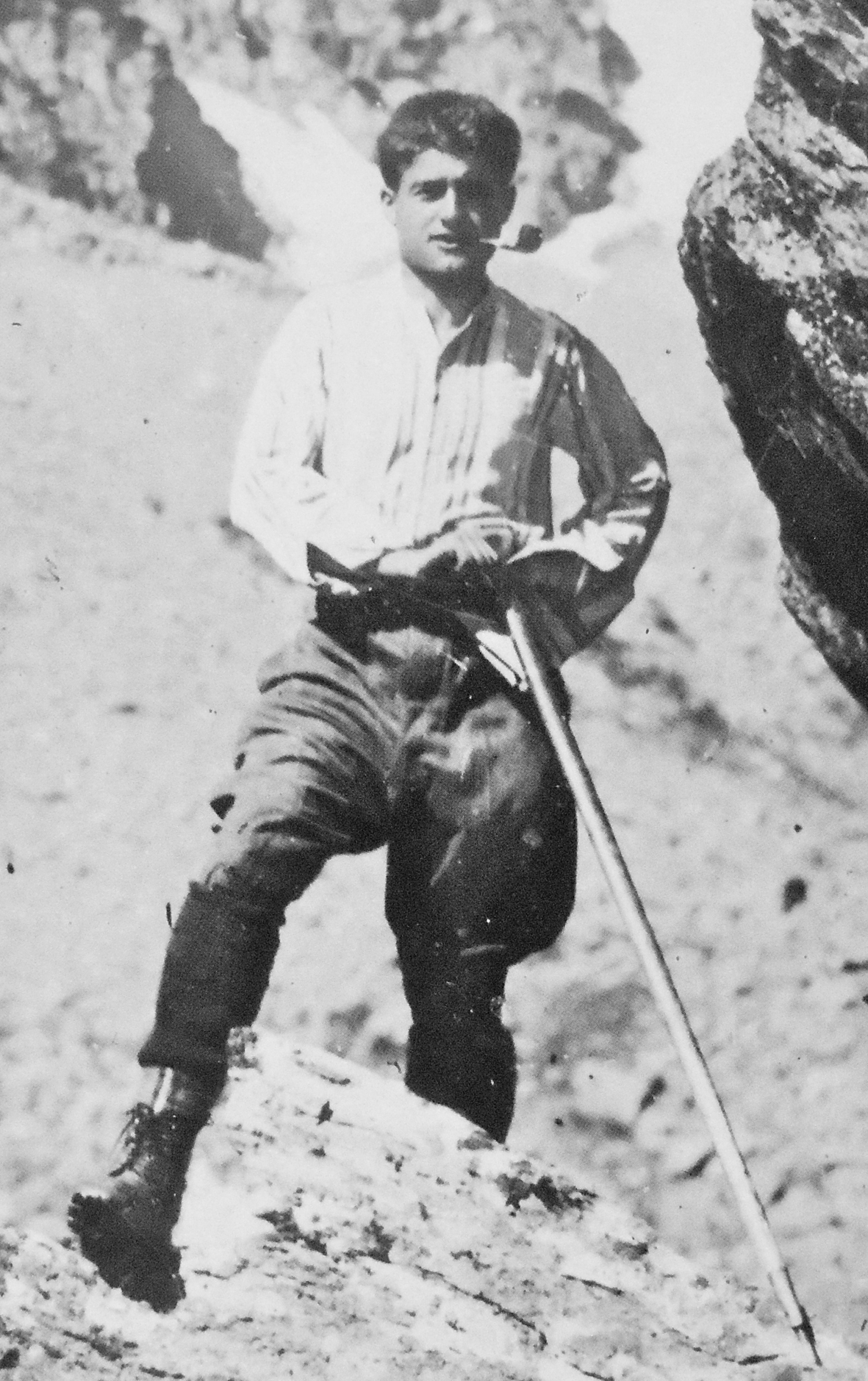
“The higher we go, the better we shall hear the voice of Christ.” This quote was said by a Blessed Pier Giorgio Frassati, a well-known figure among youth in the Catholic community. Frassati today is heralded as a patron for the youth. One thing that intrigued me about this individual is that he is a Third Order Dominican, a branch of the Dominican Order that is designated for lay men and women who feel called to follow the Dominican way of life. Furthermore, the picture above of Frassati says a lot about his character as a person.

What I like about him in the picture is his sense of adventure. He was known for his love for the mountains. A similar thing can be said for me, not that I am a mountaineer, but that I have a love for the outdoors. Looking at Frassati, I see many aspects of this life that I really resonate with. Frassati had an ardent love for the poor, he himself a member of the Society of St. Vincent de Paul. He also had a strong Eucharistic and Marian devotion. These three aspects are something that I am trying to cultivate myself as a Catholic man. A couple years ago, I left the Dominicans after discerning a call to religious life and priesthood for 4.5 years. It was a tough decision to leave, but I know that God is calling me to be a husband and a father.

I recently joined the Knights of Columbus, which is fitting being a Catholic in the state of Connecticut. Being a knight has given me an opportunity to be part of a community and feel that sense of fraternity that I once had when I was a Dominican brother in studies. One of the things that I am currently yearning for now is more intellectual formation, for which the Dominicans have been a great inspiration for me. Coming across Frassati is truly a blessing. This Advent, I want to spend some time getting to know Frassati more in depth as his life really speaks to me. How fitting that he passed the age of twenty-four, about the same age that I entered the Dominican novitiate.

As we continue the third week of Advent,  I reflect on those words of Frassati. The higher we go, out of ourselves and continue to seek Christ in our daily life, the more we experience. Like climbing a mountain, we feel the exertion with each step up, but the beauty and splendor that we encounter is all the more. Frassati, I ask for your intercession, to grant me the courage to follow the Lord as you have.